Cnidarian Definition Life Cycle Classes amp Facts Britannica
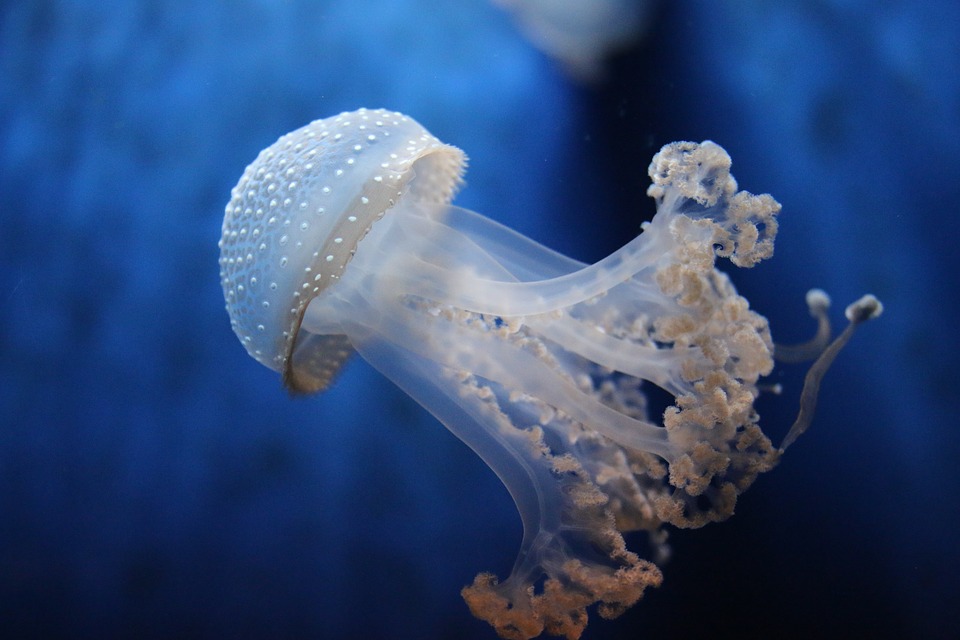
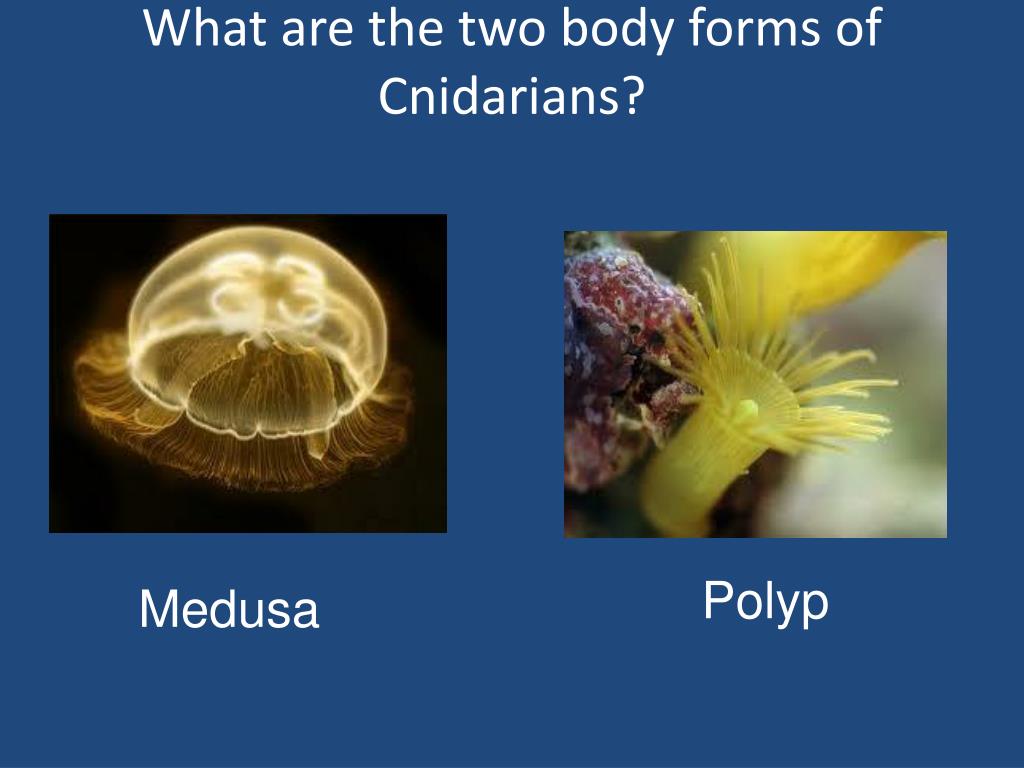
Web Sep 15 2023 nbsp 0183 32 Cnidarians have two body forms polyp and medusa which often occur within the life cycle of a single cnidarian Britannica Quiz Deadliest Animals Quiz The body of a medusa commonly called a jellyfish usually has the shape of a bell or an umbrella with tentacles hanging downward at the margin
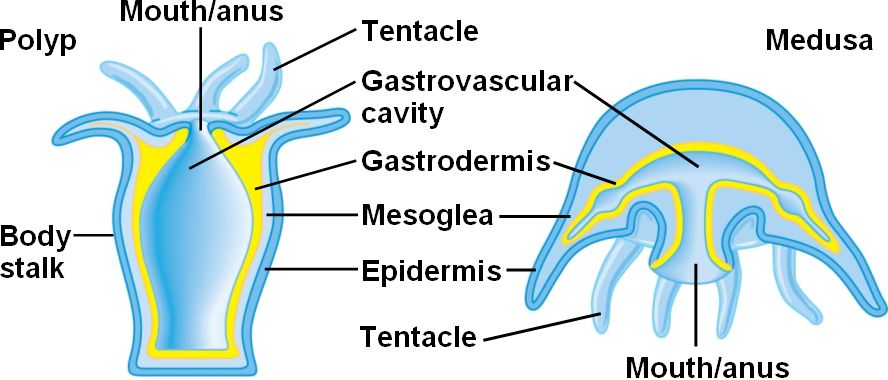
11 5 Cnidarians Biology LibreTexts, Web There are two basic body plans in cnidarians They are called the polyp and medusa Both are shown in Figure below The polyp has a tubular body and is usually sessile The medusa plural medusae has a bell shaped body and is typically motile Some cnidarian species alternate between polyp and medusa forms
A Guide To The Cnidarians Basics And Beyond ThoughtCo
Web Mar 30 2019 nbsp 0183 32 Cnidarians take on two basic forms a medusa and a polyp The medusa form is a free swimming structure which consists of an umbrella shaped body called a bell a fringe of tentacles that hang from the edge of the bell a mouth opening located on the underside of the bell and a gastrovascular cavity
Cnidarian Polyp Medusa Tentacles Britannica, Web Nematocyst bearing radial metazoans without organs Have a cellular inner endoderm and outer ectoderm separated by noncellular mesoglea Polyp and medusa forms either or both may be present in one life history Most polyps have tentacles around mouth tentacles of medusae at bell margin

ADW Cnidaria INFORMATION
ADW Cnidaria INFORMATION, Web Cnidarians have two basic body forms medusa and polyp Medusae such as adult jellyfish are free swimming or floating They usually have umbrella shaped bodies and tetramerous four part symmetry The mouth is usually on the concave side and the tentacles originate on the rim of the umbrella Polyps in contrast are usually sessile
Welcome To CK 12 Foundation CK 12 Foundation
28 2A Phylum Cnidaria Biology LibreTexts
28 2A Phylum Cnidaria Biology LibreTexts Web All cnidarians have two membrane layers in the body the epidermis and the gastrodermis between both layers they have the mesoglea which is a connective layer Cnidarians carry out extracellular digestion where enzymes break down the food particles and cells lining the gastrovascular cavity absorb the nutrients

Cnidarians Respiratory System
Web Figure 28 6 Cnidarian body forms Cnidarians have two distinct body plans the medusa a and the polyp b All cnidarians have two membrane layers with a jelly like mesoglea between them Some cnidarians are dimorphic that 5 8 3 Phylum Cnidaria Biology LibreTexts. Web Sep 23 2021 nbsp 0183 32 Cnidarians display two distinct body plans polyp or stalk and medusa or bell Figure PageIndex 4 Examples of the polyp form are freshwater species of the genus Hydra perhaps the best known medusoid animals are the jellies jellyfish Web cnidarian or coelenterate Any of about 9 000 species of mostly marine aquatic invertebrates constituting the phylum Cnidaria or Coelenterata that are unique in possessing specialized stinging cells cnidocytes borne on the tentacles
Another Cnidarian Body Forms you can download
You can find and download another posts related to Cnidarian Body Forms by clicking link below
- 13 2 Phylum Cnidaria Biology 110 PSU Dubois
- PPT Invertebrates Sponges And Cnidarians PowerPoint Presentation
- PPT Table Of Contents PowerPoint Presentation Free Download ID 6535490
- Unit Three Cnidarians Flashcards Quizlet
- Animalia Grade 11 Biology Study Guide
Thankyou for visiting and read this post about Cnidarian Body Forms