12 The Chemical Bond Chemistry LibreTexts
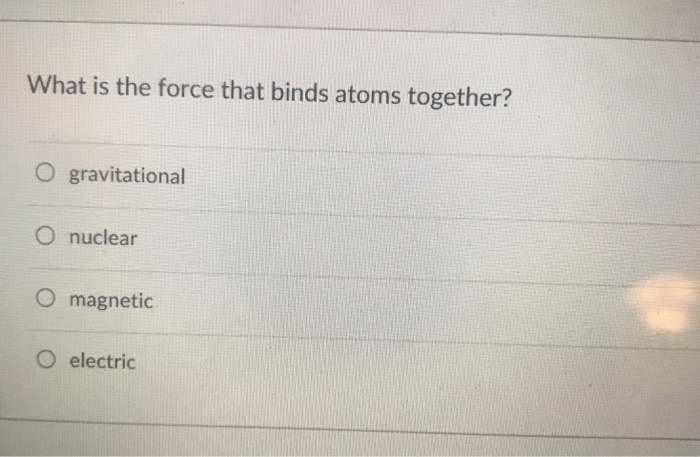
Web Mar 17 2022 nbsp 0183 32 12 The Chemical Bond Chemical bond refers to the forces holding atoms together to form molecules and solids This force is of an electric nature and the attraction between electrons of one atom to the nucleus of another atom contributes to what is known as chemical bonds
Intermolecular Bonds Structure And Bonding Higher , Web Part of Chemistry Chemical changes and structure Revise Test 1 2 3 4 5 6 7 8 9 10 Intermolecular bonds are found between molecules They are also known as Van der Waals forces
Covalent Bonds Covalent Bonding AQA Synergy BBC
Web Covalent bonding A covalent bond is a shared pair of electrons Covalent bonding results in the formation of molecules or giant structures Substances with small molecules have low melting and
Atoms And Molecules BBC Bitesize, Web KS3 Atoms and molecules Part of Chemistry Atoms elements and compounds Key points Atoms are the building blocks of everything Atoms can form strong bonds with each other
Why Do Atoms Stick Together Physics Stack Exchange
Why Do Atoms Stick Together Physics Stack Exchange, Web In the Atomic world there are two fundamental forces that bind atoms together and they are the Electromagnetic Force amp Strong Force Because every atom is made up of protons and electrons as well as Neutrons but they have a neutral charge
2 5 Chemical Compounds Chemistry LibreTexts
Atom Electrons Nucleus Bonds Britannica
Atom Electrons Nucleus Bonds Britannica Web polar covalent bond There are also ways for atoms and molecules to bond without actually exchanging or sharing electrons In many molecules the internal forces are such that the electrons tend to cluster at one end of the molecule

The Universal Mind Is Not Only Intelligence but It Is Substance And
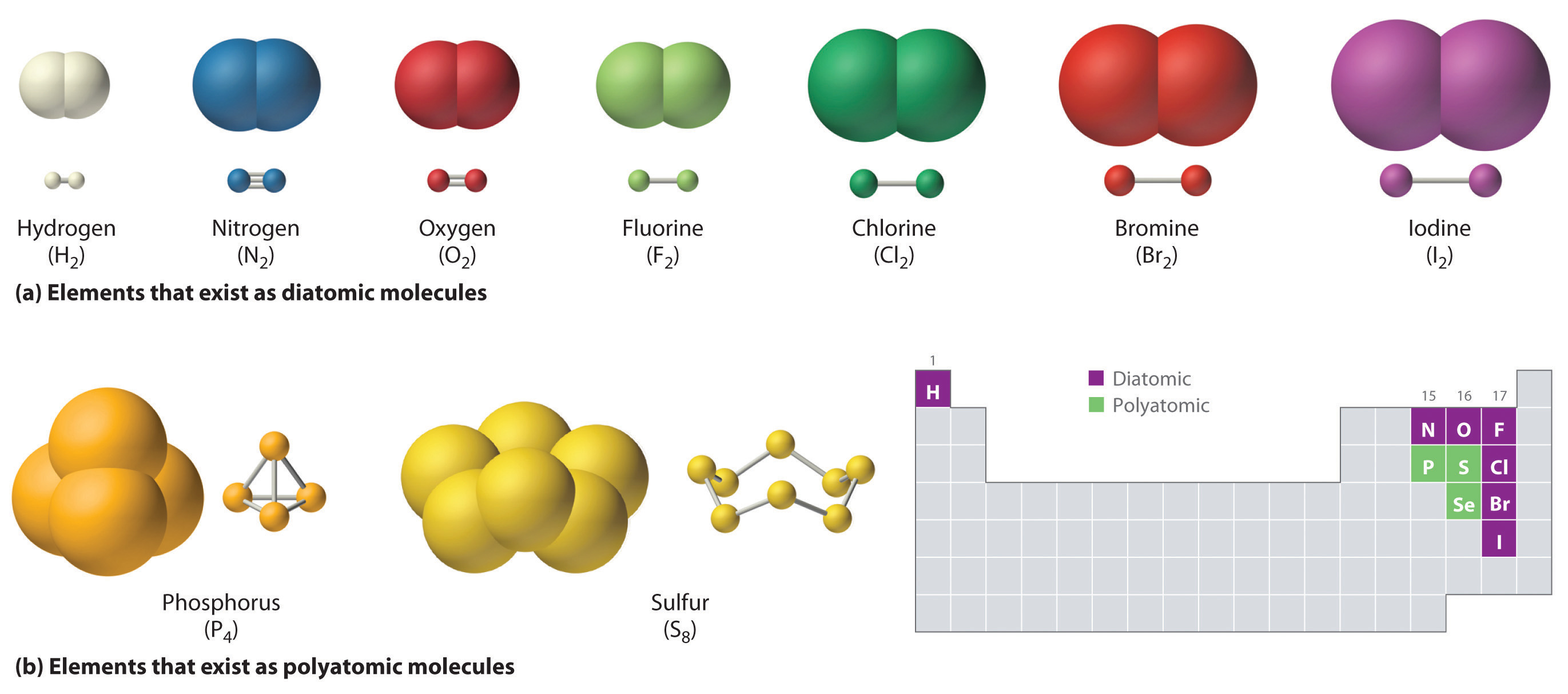
Web Chemistry Single Science Bonding structure and properties Revise Test 1 2 3 4 Covalent bonding A covalent bond forms when two non metal atoms share a pair of electrons The electrons Covalent Bonding Bonding GCSE Chemistry Single Science. Web Atoms that share pairs of electrons form molecules A molecule is a group of atoms held together by covalent bonds A diatomic molecule is a molecule containing only two atoms There Web On a larger scale of about 1 to 3 fm it is the force carried by mesons that binds protons and neutrons nucleons together to form the nucleus of an atom On the smaller scale less than about 0 8 fm the radius of a nucleon it is the force carried by gluons that holds quarks together to form protons neutrons and other hadron particles

Another Which Force Binds Atoms Together To Form Molecules you can download
You can find and download another posts related to Which Force Binds Atoms Together To Form Molecules by clicking link below
- The Fundamental Force Underlying All Chemical Reactions Is
- Key For Take Home Test Chapter 16
- The Universal Mind Is Not Only Intelligence But It Is Substance And
- Introduction Biology
- What Force Is Responsible For Binding Two Atoms Together Or Binding
Thankyou for visiting and read this post about Which Force Binds Atoms Together To Form Molecules